
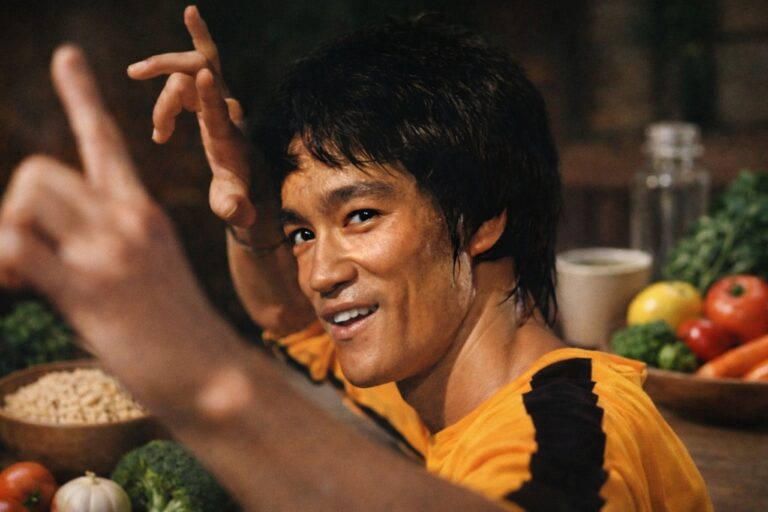
People talk about “Bruce Lee’s diet” like a secret scroll locked inside a monastery. The record shows a different picture. A driven athlete treated food as part of training.
He experimented, paid attention to daily feedback, adjusted, and kept moving forward. No rigid dogma. No frozen menu carved into stone.
A modern adaptation should copy principles, not cosplay a 1960s grocery list. Bruce trained hard, burned a large amount of energy, and lived in a rhythm built around recovery.
Most readers work long hours, sit in traffic, sleep fewer hours than planned, and train when time allows. The goal of this article is practical. Build a Bruce Lee-inspired structure that fits modern nutrition evidence, current public health guardrails, and real-life schedules. Let’s begin.
What Can Be Verified About Bruce Lee’s Eating Habits
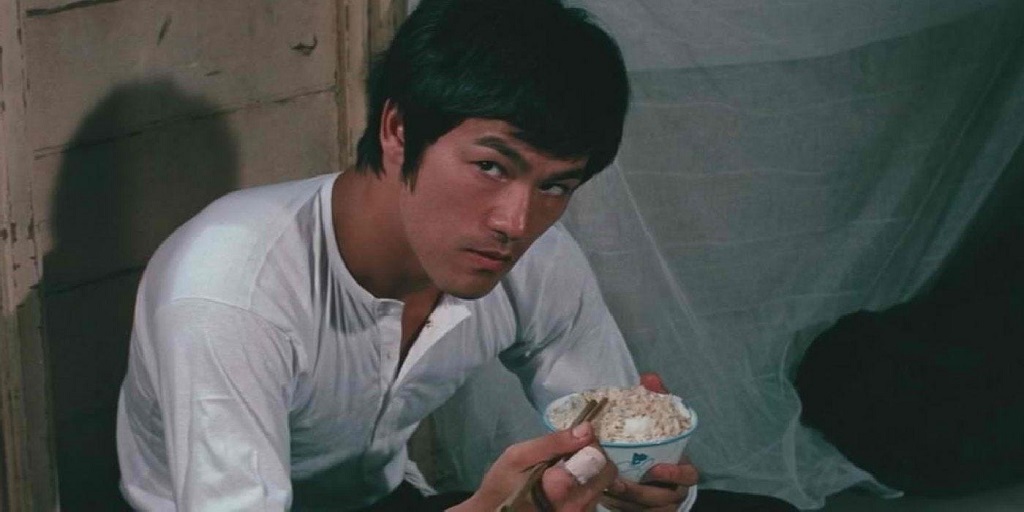
Bruce Lee Enterprises published a podcast post that summarized his general approach. Several points show up with enough consistency to use responsibly.
- He experimented constantly and treated nutrition as part of training.
- His diet varied, while protein shakes and juices were consistent, prepared with a commercial-grade juicer.
- He tried an organ meat-focused phase for mineral intake.
- Tea was a daily habit, with added supplements such as ginseng and royal jelly.
- He typically ate 5 smaller meals per day.
- Sleep mattered, with a personal target of 8 hours.
- He did not smoke, drink alcohol, or drink coffee.
- His guiding food quote stayed simple. “Eat what your body requires, and don’t get carried away with foods that don’t benefit you.”
That list offers structure without pretending to provide an exact historical menu. Anyone promising a perfect Bruce Lee meal plan with fixed foods at fixed times is filling in gaps with guesswork.
The Philosophy Behind A Bruce Lee Style Diet
Food served as a daily training tool in Bruce Lee’s world, chosen to support energy, recovery, and consistency rather than follow rigid rules.
Food As A Performance Tool
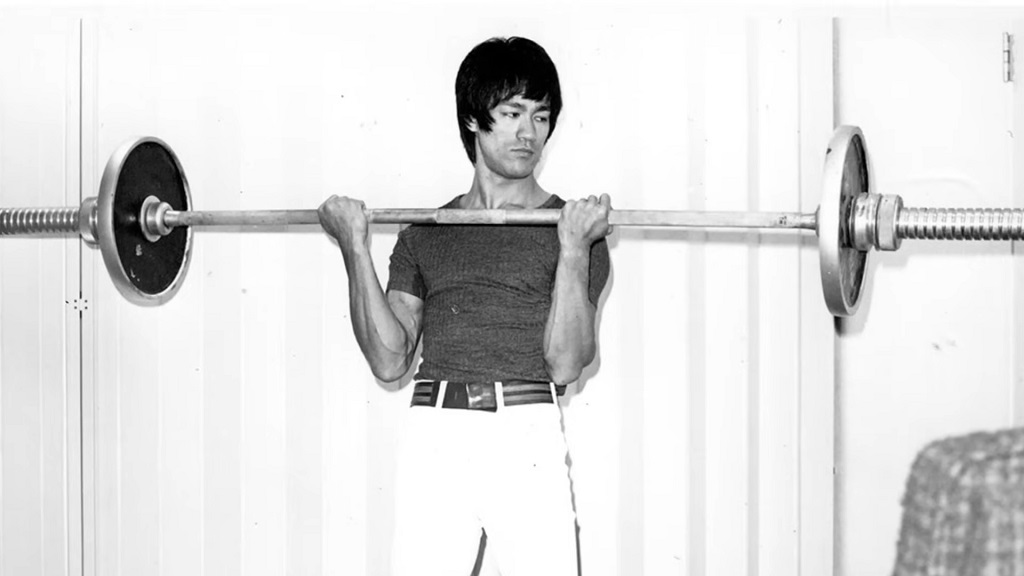
Nutrition served training output, recovery quality, and consistency. Meals existed to support energy, hydration, focus, tissue repair, and daily rhythm. A diet built on that mindset has 3 jobs.
- Support training output through adequate energy, hydration, and micronutrients.
- Support recovery through protein sufficiency, mineral intake, and sleep support.
- Keep daily life repeatable through meals that remain easy to prepare and tolerate.
Self Experimentation As A Method
He tested what worked for his body, including variations and supplements. A modern translation uses a simple feedback loop.
- Pick a baseline plan for 2 weeks.
- Track 3 signals. Training quality, energy around midday, and sleep quality.
- Change one variable at a time. Examples include protein distribution, carbohydrate timing, fiber intake, caffeine, or meal size.
“Foods That Benefit You”
The quote points toward usefulness and moderation rather than rules for their own sake. A modern translation uses a default pattern that keeps meals fueling daily activity, with guardrails that keep ultra-processed foods from taking over the weekly calorie budget.
Modern Nutrition Guardrails To Anchor The Adaptation
A 2026 plan should rest on guidance that remains stable and evidence-based.
WHO Baseline Targets
Healthy diet guidance offers clear global targets.
- At least 400 g of fruits and vegetables per day, often described as 5 portions.
- Free sugars under 10% of total energy, with an additional benefit target under 5%. WHO counts sugars in fruit juice as free sugars.
- Total fat under 30% of total energy, saturated fat under 10%, trans fat under 1%.
- Salt under 5 g per day, about 2,000 mg sodium.
Those numbers act as health guardrails that help a performance-focused diet avoid long-term risk.
US Federal Guidance Used Carefully
Dietary Guidelines for Americans 2025 to 2030 emphasizes eating real food and reducing highly processed products that bring refined carbohydrates, added sugars, excess sodium, unhealthy fats, and additives.
Public health data within that guidance reports more than 70% of American adults as overweight or obese, and nearly one in three adolescents ages 12 to 17 with prediabetes.
Use that information as context rather than a personal label. A personal plan still depends on training volume, body size, goals, and medical status.
Do You Need 5 Meals Per Day
Bruce often ate 5 smaller meals. Modern evidence says meal frequency by itself carries little magic.
An ISSN position stand on meal frequency reports that increasing frequency does not appear to improve body composition in sedentary populations when other variables are controlled.
Higher frequency may help preserve lean mass during calorie restriction in athletic populations when protein intake remains adequate.
Here are some practical takeaways:
- Hard training with difficulty meeting calorie needs often benefits from 4 to 6 eating moments.
- Weight-cutting phases with hunger challenges often benefit from more frequent protein-rich meals.
- Personal preference still matters. Three meals plus one snack can work when total intake and protein distribution remain solid.
Macro Framework For A Bruce Lee Style Plan
Bruce trained at high volume and used protein shakes. A modern adaptation prioritizes protein sufficiency, carbohydrate timing around training, and fats that protect micronutrient intake.
Protein Distribution
ISSN protein and exercise guidance covers protein needs, timing, and quality for active people. A simple structure works for many.
- 3 to 5 protein doses per day.
- Roughly 0.25 g per kg bodyweight per meal, often about 20 to 40 g per meal for many adults.
- Food remains the base. Protein shakes act as a tool. Bruce used shakes consistently, so using a shake to close a daily gap matches the spirit.
Carbohydrate Timing
Skill-heavy and athletic training relies on carbohydrate availability.
Sports nutrition consensus often cites carbohydrate intake during prolonged endurance exercise around 30 to 60 g per hour, with higher intakes possible in longer events when the gut has been trained.
Pre-exercise carbohydrate scales with session length and intensity.
For martial artists, lifters, and hybrid athletes, a simple rule applies. Place most carbohydrate intake around training sessions. Choose slower carbohydrates at other times.
Fat Intake
WHO fat targets offer a good long-term guardrail. For performance, favor unsaturated fats such as olive oil, nuts, seeds, and fatty fish. Keep very high-fat meals away from hard training sessions if digestion feels sluggish.
A Simple Plate Structure
Nearly any cuisine fits within a consistent plate pattern.
- Protein: 1 to 2 palms per meal.
- Vegetables: 1 to 2 fists per meal.
- Carbohydrates: 1 to 2 cupped hands per meal, higher on hard training days.
- Fats: 1 to 2 thumbs per meal.
Scaling portions up or down keeps eating flexible while honoring the “eat what your body requires” principle.
Where Juicing Fits
Bruce consistently drank juices. WHO counts sugars in fruit juice as free sugars and advises keeping free sugar intake under 10% of energy, ideally under 5%.
- A modern compromise keeps flavor and reduces risk.
- Prefer smoothies over juice most days to retain fiber.
- If juicing, keep portions modest, around 250 ml.
- Pair juice with protein to slow sugar absorption.
- Use vegetables heavily in blends and add fruit for taste.
Supplements In A Modern Context
Bruce added ginseng and royal jelly to tea and used supplements as part of his routine. Modern supplement markets remain loosely regulated.
In the United States, the FDA does not approve dietary supplements for safety and effectiveness before marketing.
Athletes who compete in tested sports or value contamination control benefit from third-party certification.
NSF Certified for Sport describes testing that screens for hundreds of banned substances with ongoing monitoring.
USADA recognizes NSF Certified for Sport as best suited to reduce risk, while noting risk reduction rather than elimination.
Evidence-Backed Performance Supplements
Keep the list tight.
- Creatine monohydrate. ISSN position stand supports effectiveness for high-intensity exercise and training adaptations with a strong safety record in healthy individuals at recommended doses.
- Caffeine. ISSN position stand reports performance benefits across endurance and high-intensity efforts, with individual variability.
- Beta-alanine. ISSN position stand notes that typical dosing around 4 to 6 g per day increases muscle carnosine and can improve performance in efforts lasting roughly 1 to 4 minutes, with tingling as the main side effect.
- Protein powder. Useful when daily protein goals remain hard to reach through food.
Medical guidance remains important for people with kidney disease, hypertension, arrhythmias, anxiety disorders, or medication use.
A Modern Bruce Lee Style Daily Schedule
Bruce often ate 5 smaller meals. The structure below fits normal workdays.
Training Day Template
- Breakfast, meal 1. Protein, fruit, and a slow carbohydrate.
- Late morning, meal 2. Protein and fiber.
- Lunch, meal 3. Protein, vegetables, carbohydrates, and olive oil.
- Pre-training, meal 4. Easy carbohydrate and lean protein 60 to 120 minutes before training.
- Dinner, meal 5. Protein, vegetables, and carbohydrates as needed.
- Optional pre-bed protein if daily intake remains low.
Sample High Training Day
| Meal | Example | Goal |
| Breakfast | Oats cooked with milk or soy milk, banana, nuts, plus eggs or tofu scramble | Glycogen refill and protein |
| Snack | Greek yogurt with berries or a protein shake with fruit | Easy protein dose |
| Lunch | Protein bowl with rice, mixed vegetables, olive oil, herbs | Main fuel block |
| Pre Training | Rice cakes or bread with honey, plus whey or lean protein | Quick energy |
| Post Training | Protein shake or lean protein meal with carbohydrates | Recovery |
| Dinner | Stir fry with vegetables, noodles or rice, protein, small portion of healthy fats | Micronutrients and recovery |
Tea fits well as a hydration anchor. Keep sweeteners controlled to stay aligned with WHO sugar targets.
Seven-Day Bruce Lee-Inspired Meal Plan
Use the structure and rotate flavors.
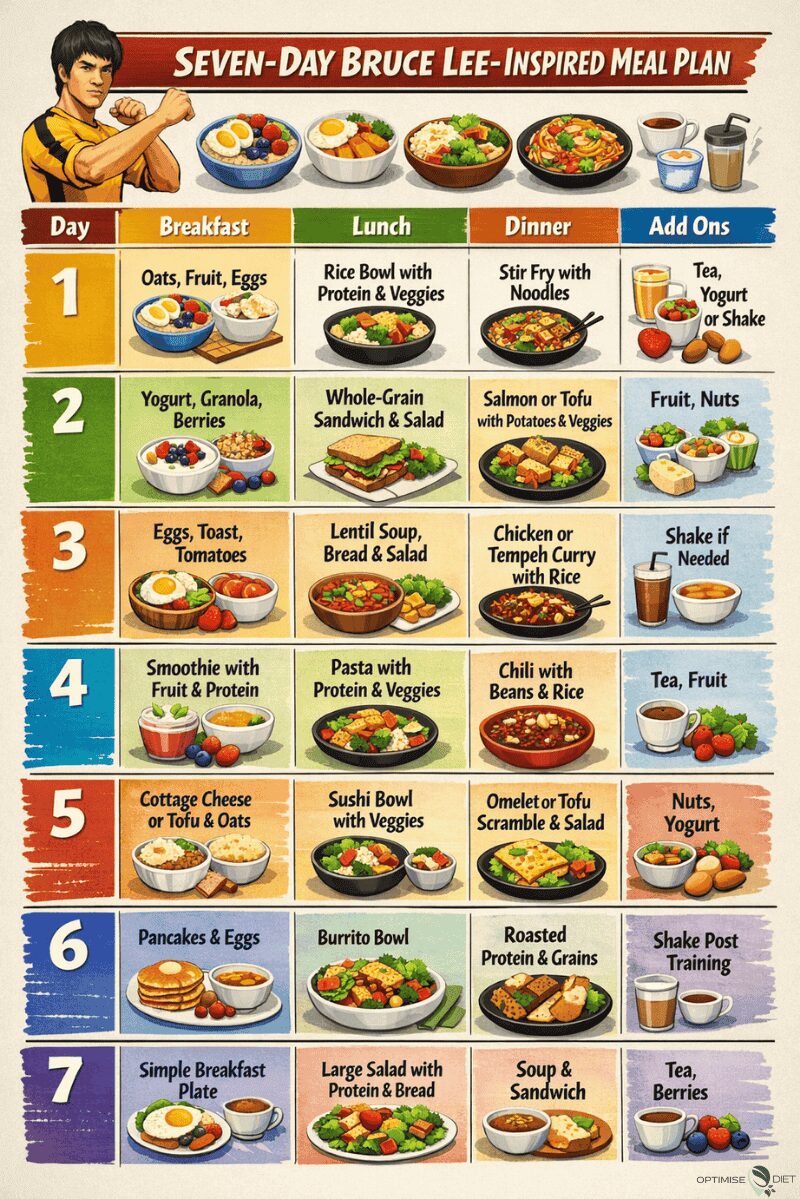
Weight-cutting phases reduce carbohydrate portions on rest days while keeping protein stable and vegetables high.
Mass gain phases scale carbohydrates around training, add a second shake, and include calorie-dense whole foods such as rice, potatoes, olive oil, nuts, and dairy when tolerated.
A Weekly Checklist
Use a weekly review. Meeting 4 of 6 most weeks keeps the plan on track.
- Protein consumed 3 to 5 times daily.
- Average fruit and vegetable intake around 400 g per day.
- Free sugars controlled, juice not acting as the main fruit source.
- Salt kept reasonable, highly processed foods limited.
- Hydration routine in place, with tea as an option.
- Sleep routine protected, with a realistic path toward 8 hours.
Closing Thoughts
Bruce Lee treated nutrition as part of training rather than a side hobby. His approach focused on usefulness, experimentation, and repeatability.
A modern adaptation respects that mindset, anchors choices to current public health guardrails, and keeps meals practical for busy schedules. Build a simple structure, track feedback, and adjust with patience. That path honors the philosophy without turning food into theater.