
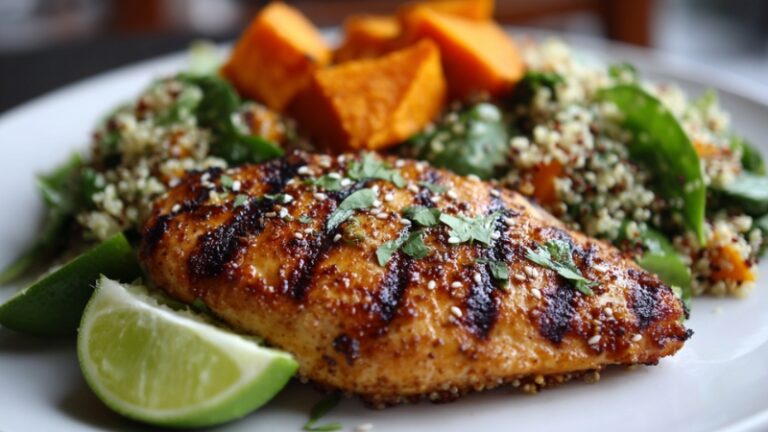
Powerlifting nutrition is not complicated, but it is specific. The job is to show up to training with enough fuel to move heavy weight, recover well enough to repeat it, and manage bodyweight in a way that fits your class and timeline.
The best plans do three things consistently: cover total calories, hit protein with intent, and treat carbs and recovery foods as performance tools.
Today, we prepared practical, applied guidance. No gimmicks. No magic foods. Just clear targets, why they matter, and how to use them day to day.
Start With Calories Because Calories Decide Outcomes
Protein gets the hype, but calorie intake sets the direction. When total energy intake runs too low, training quality drops, recovery drags, and risk for low energy availability rises.
That problem is not limited to endurance sports. Strength athletes run into it often, especially during long training blocks or aggressive cuts.
Calories decide whether the body has room to adapt to training or spends its energy budget just trying to keep the lights on.
Maintenance, Surplus, Deficit: Choose The Phase You Are Actually In
Most powerlifters rotate through some version of three phases:
- Build Phase: A small, controlled surplus to support performance and lean mass gains.
- Hold Phase: Bodyweight stays stable while performance is pushed, often used when sitting close to a weight class limit.
- Cut Phase: A measured deficit to reduce bodyweight while protecting strength and lean mass.
The International Society of Sports Nutrition notes that lean mass gain requires a sustained caloric surplus, while fat loss requires a sustained caloric deficit.
Many lifters try to sit in the middle forever, aiming for recomposition during every phase, then wonder why progress stalls.
Practical Targets That Fit Powerlifting
Evidence from resistance sport literature points toward moderate surpluses for controlled gain.
A review on off-season bodybuilding nutrition suggested a hyper-energetic intake around 10%–20% above maintenance, aiming for 0.25%–0.5% bodyweight gain per week for novice to intermediate athletes, with advanced athletes usually benefiting from a smaller surplus.
Powerlifting is not bodybuilding, but the constraint is the same. Surplus supports adaptation. Too much surplus usually buys extra fat and harder cuts later.
A Simple Way To Set A Starting Calorie Target
- Track 7–14 days of intake and morning scale weight.
- If weight is stable, maintenance is identified.
- Adjust based on phase:
- Build: add about 5%–10% calories to start.
- Cut: reduce about 10%–20%, depending on timeline and leanness.
- Reassess every 2 weeks.
If tracking feels heavy, use performance markers as a check. Losing reps at stable loads, slower bar speed, worse sleep, and persistent soreness often point to underfueling, especially when several show up together.
Protein: The Non-Negotiable For Strength Athletes
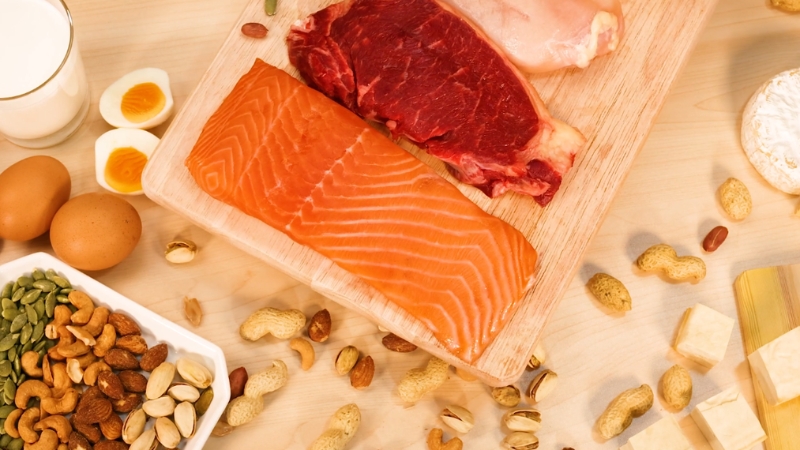
Protein supports muscle protein synthesis, limits lean mass loss during cuts, and improves recovery capacity from hard training. Resistance exercise and protein intake amplify each other when they happen in reasonable proximity.
Daily Protein Targets That Actually Make Sense
A widely cited position stand from the ISSN concluded that total daily protein intake around 1.4–2.0 g per kg bodyweight per day is sufficient for most exercising individuals.
Higher intakes can help retain lean mass during calorie restriction, with ranges like 2.3–3.1 g/kg/day appearing in resistance-trained subjects under hypocaloric conditions.
For powerlifting, a clean framework looks like this:
- Maintenance or Surplus: 1.6–2.2 g/kg/day
- Cut: move toward the higher end, sometimes beyond 2.2 g/kg/day, depending on leanness, deficit size, and how aggressively muscle needs to be protected
Protein Distribution Matters More Than People Admit
Hitting 180 g of protein somewhere in the day is not the same as distributing protein in a way that repeatedly stimulates muscle protein synthesis.
The ISSN nutrient timing position stand summarizes evidence supporting protein doses around 0.25–0.40 g/kg per serving, repeated every 3–4 hours, using high-quality sources.
It also highlights that 30–40 g of casein protein before sleep can increase overnight muscle protein synthesis acutely.
A separate analysis focused on per-meal protein suggests a practical target around 0.4 g/kg per meal, across at least four meals, to reach 1.6 g/kg/day, with higher per-meal amounts required to reach daily intakes like 2.2 g/kg/day.
Practical takeaway
- Most lifters thrive on 3–5 protein feedings per day.
- Anchor protein at breakfast and post-training, not only at dinner.
Carbs: The Training Quality Lever

Powerlifting meets are built on heavy singles and triples. Training blocks rarely are. Volume work, accessories, repeated sets, and longer sessions rely heavily on glycogen.
A strength-sport nutrition paper reported that a single resistance training session can reduce muscle glycogen by as much as 24%–40%, depending on volume, intensity, and structure.
Higher-rep, moderate-load work tends to deplete glycogen more than low-rep work. Even lifters who live for singles usually carry enough weekly volume for carbs to matter.
How Many Carbs Do Powerlifters Need
Reported intakes in strength athletes often land around:
- 3–5 g/kg/day in lifters and throwers
- 4–7 g/kg/day in bodybuilders during training periods
Those figures come from the same review literature. Endurance-level carb intakes are rarely required, but very low carb intake can make hard training feel unnecessarily heavy, especially with frequent sessions or high accessory volume.
Practical Carb Ranges
- Lower volume, 3–4 days/week: often fine at 2–4 g/kg/day
- Higher volume, 4–6 days/week: often better at 3–6 g/kg/day
- Hard blocks, very high volume: can push higher if digestion and appetite allow
Those are working ranges, not moral rules.
Fat: Useful, Often Mismanaged
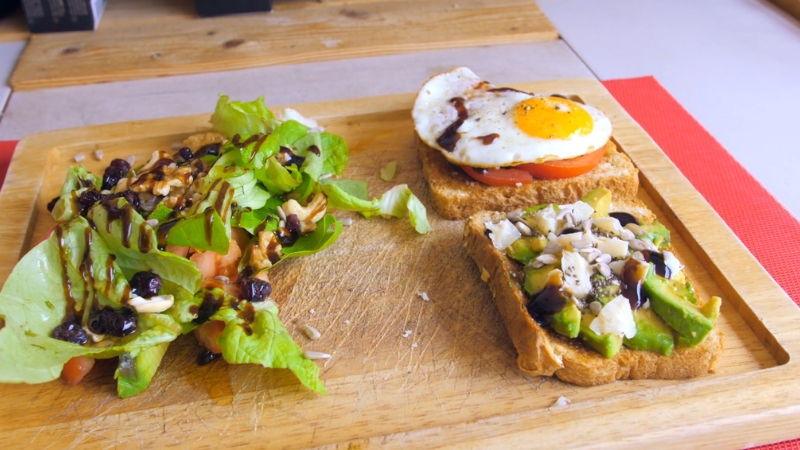
Dietary fat supports essential fatty acids, fat-soluble vitamins, and helps larger lifters hit high-calorie needs without force-feeding carbs.
In practice, the issue is rarely fat alone. The problem shows up when fat crowds out carbs so aggressively that training energy dips, or when sources are mostly saturated and ultra-processed.
Strength-sport nutrition literature notes that fat intake in strength-power athletes is often relatively high and commonly derived from animal foods, with practical implications for total energy balance in athletes who carry very high calorie needs.
Practical Fat Target
A reliable starting range is 20%–35% of total calories, adjusted based on:
- appetite
- digestion
- whether carbs feel adequate for training output
Recovery Foods
Recovery food is not just a post-workout shake. It is a daily pattern that includes pre-training fuel, intra-session support when useful, and post-training refueling.
Pre-Workout: Show Up Fueled, Not Full
The most important thing for pre-workout nutrition:
𝗡𝗼𝘁 𝗯𝗲𝗶𝗻𝗴 𝗵𝘂𝗻𝗴𝗿𝘆 𝗱𝘂𝗿𝗶𝗻𝗴 𝘆𝗼𝘂𝗿 𝘄𝗼𝗿𝗸𝗼𝘂𝘁.
It’s simpler than you think 💪🏼 pic.twitter.com/VMByMU5D8P
— Jeff Nippard (@JeffNippard) January 27, 2024
The joint position paper from the American College of Sports Medicine, the Academy of Nutrition and Dietetics, and Dietitians of Canada includes pre-exercise carbohydrate guidance commonly cited as 1–4 g/kg in the 1–4 hours before exercise.
For lifting, the top end is rarely necessary, but the principle holds: scale carbs to the session and keep digestion smooth.
Examples that work for lifters
- 90 minutes pre: rice with lean meat, plus a banana
- 60 minutes pre: yogurt with cereal, or a bagel with whey
- 30 minutes pre when appetite is low: sports drink plus a small carb source
Intra-Workout: Only When It Earns Its Place
For long, high-volume sessions or during a cut, simple carbs during training can help maintain output. Many lifters do fine with water and electrolytes. When sessions run 90+ minutes with heavy volume, carbs can earn their keep.
Post-Workout: Rebuild Glycogen And Deliver Amino Acids
For glycogen restoration, the same position paper notes that early carbohydrate intake can maximize refueling when rapid recovery is needed, often expressed as ~1–1.2 g/kg per hour for the first 4–6 hours in high-demand scenarios.
Powerlifting rarely needs that level of aggression unless multiple sessions happen in a day.
Protein timing lines up with the ISSN guidance on repeated servings of 0.25–0.40 g/kg every few hours.
Simple post-workout template
- Protein: 25–50 g, scaled to body size
- Carbs: 30–100 g, based on session volume and next training time
- Add sodium and fluids if the sweat rate is high
Supplements
Supplements are optional. Food and total energy come first. If supplements are used, stick to options with strong evidence, known dosing, and low risk.
Creatine Monohydrate
View this post on Instagram
The ISSN position statement on creatine describes a common protocol:
- Loading around 0.3 g/kg/day for at least 3 days, followed by
- 3–5 g/day to maintain elevated stores
Creatine remains one of the most consistently supported supplements for strength and power performance and is also listed among supplements with adequate support in the International Olympic Committee consensus on dietary supplements for high-performance athletes.
Caffeine
An ISSN position stand on caffeine reports consistent performance benefits at doses around 3–6 mg/kg body mass, with timing often around 60 minutes pre-exercise.
Higher doses bring more side effects without a guaranteed extra benefit.
For powerlifting, caffeine tends to help perceived effort, alertness, and the ability to push hard sets. The technique still needs practice.
The “Maybe” Category
The IOC consensus statement lists other supplements with support for marginal gains in some settings, such as nitrate and sodium bicarbonate, with beta-alanine categorized as possibly supported.
For most powerlifters, creatine and caffeine deliver the majority of benefit with minimal complications.
Making Weight Without Wrecking Performance
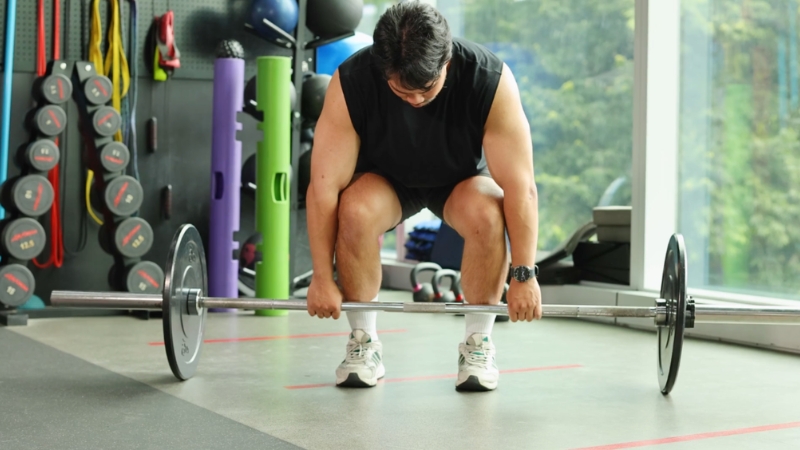
The Safest Cut Is The One Started Early
Measured deficits over weeks preserve more strength than panic cuts late. Slower weight loss trends show better lean mass retention in leaner subjects, aligning with ISSN guidance on body composition dieting principles.
Meet Timeline Logic
- 8–16 weeks out: use a modest deficit if a class change is required
- Last 7–10 days: keep nutrition boring, stable, high protein, adequate carbs
- Last 24–48 hours: avoid aggressive dehydration unless personal response is well known and supported
Water and sodium manipulation without experience often leads to cramping, poor sleep, and flat performance.
Macro Targets You Can Actually Use
Use the table below as a starting point, then adjust based on bodyweight trend, training output, and recovery markers.
Starting Macro Ranges By Phase
| Phase | Calories | Protein | Carbs | Fat |
| Build | Maintenance + 5%–10% | 1.6–2.2 g/kg | 3–6 g/kg (more if volume is high) | 20%–35% calories |
| Hold | Maintenance | 1.6–2.2 g/kg | 2–5 g/kg | 20%–35% calories |
| Cut | Maintenance – 10%–20% | 1.8–2.6 g/kg (case dependent) | 2–4 g/kg | 20%–35% calories |
Protein ranges reflect ISSN guidance on 1.4–2.0 g/kg/day for most exercising individuals, with higher needs during hypocaloric periods.
Carb considerations align with documented glycogen depletion during resistance training and reported intakes in strength athletes.
Example: 93 kg Lifter, Hard 4-Day Program, Build Phase
Assume maintenance is 3,200 kcal.
- Calories: 3,400–3,500 kcal
- Protein: 1.8 g/kg = 167 g (668 kcal)
- Carbs: 4.5 g/kg = 419 g (1,676 kcal)
- Fat: remaining calories
If total is 3,450 kcal:
3,450 − (668 + 1,676) = 1,106 kcal from fat
1,106 ÷ 9 = 123 g fat
If bodyweight rises too fast, reduce 150–250 kcal, usually from fat or carbs, depending on training feel.
Recovery Foods
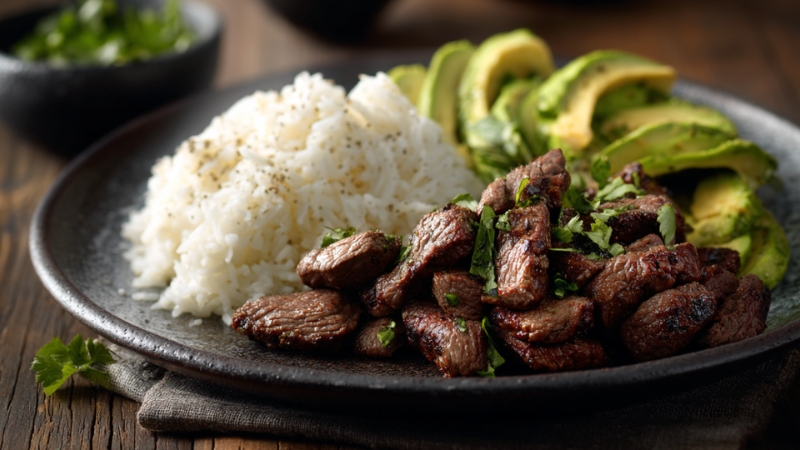
Protein Staples
- eggs, egg whites
- poultry, lean beef, fish
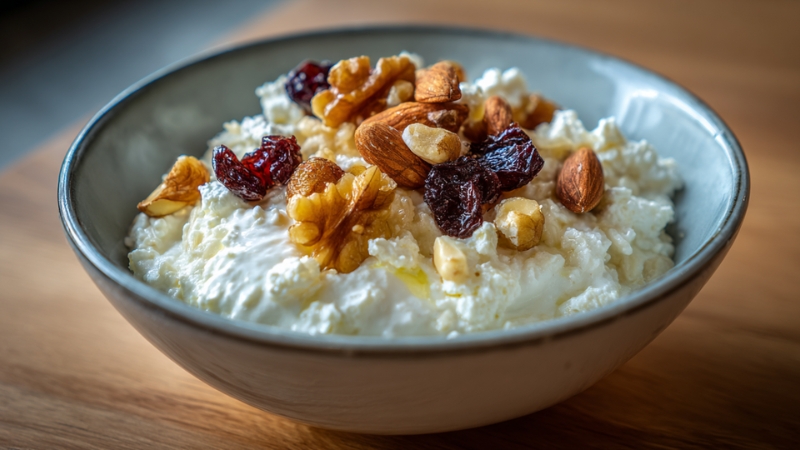
- Greek yogurt, cottage cheese
- whey or casein powder for convenience
Carb Staples
- rice, potatoes, oats
- bread, bagels, cereal for training windows
- fruit and juices when appetite runs low
Fat and Micronutrient Staples
- olive oil, nuts, nut butter
- avocado
- fatty fish when preferred
Hydration Support
- salt food consistently
- electrolytes when sweat rate is high or training in heat
Common Problems and Fast Fixes
“I hit protein but recovery still feels off.”
- Calories may be too low for the workload. Energy availability sits at the base.
- Carbs may be insufficient for volume demands. Glycogen depletion during lifting is real.
- Protein distribution may be poor. Spread intake across the day.
“Weight jumps too fast when I try to gain.”
- Surplus is too large. Start smaller and monitor weekly trends.
- Add carbs around training first, rather than adding fats everywhere.
- Use 2-week averages, not daily noise.
“Cutting crushes my strength.”
- Deficit is too aggressive for leanness and timeline.
- Protein intake is too low for the cut.
- Carbs are misplaced. Shift them toward pre- and post-training within tolerance.
Final Thoughts
@nicoflores83kg What I eat in a day as a 5’6 Powerlifter who’s built like a samsung mini fridge PT 2 #powerlifting #beginnerpowerlifter #diet ♬ original sound – Nico Flores
A solid powerlifting diet covers calories first, treats protein as non-negotiable, and uses carbs and recovery foods with intent.
When those pieces line up, training quality improves, recovery keeps pace, and bodyweight management becomes predictable.
Keep plans simple, track trends rather than emotions, and adjust with patience. That approach holds up far better than chasing perfect macros on paper.