

CrossFit can feel like a full-body physics exam during the first few weeks. Heart rate jumps fast. Legs fill with fire. Grip disappears early. Then the class ends, and stairs become a personal enemy.
Food decides whether progress shows up or whether every session feels like survival mode.
A beginner CrossFit diet does not need complexity, tracking apps glued to your phone, or influencer-level meal prep. It needs alignment with what CrossFit actually demands: repeated high-intensity efforts, heavy lifts, sprint-style conditioning, and recovery strong enough to come back tomorrow.
Today, we prepared a practical, evidence-informed guide to eating for strength and conditioning. Real targets. Real meals. Clear rules you can follow without turning nutrition into a second job.
What CrossFit Demands From Your Body And Why Food Matters
Most CrossFit programming blends several physical systems inside a single week, sometimes inside a single session.
Core Demands of CrossFit Training

- Strength and power: Heavy lifts, Olympic lift progressions, barbell cycling
- Gymnastics volume: Push-ups, pull-ups, toes-to-bar, muscle endurance under fatigue
- High-intensity conditioning: Short to medium WODs, intervals, repeated sprint efforts
All of that places heavy stress on muscle glycogen and connective tissue. Carbohydrates fuel the work. Protein repairs the damage.
A recent review of nutrition in CrossFit athletes found a consistent pattern across studies. Carbohydrate intake often sits below recommended levels.
Protein intake usually lands in an adequate range. Higher-carbohydrate approaches tended to improve CrossFit performance in the available research.
When training stays intense, but food intake falls short, beginners often report the same pattern:
- Energy drops halfway through sessions
- Strength progress stalls early
- Soreness lingers for days
- Sleep quality worsens
- Late-night sugar cravings appear
Fueling well does not guarantee leanness or strength. Fueling poorly almost guarantees stagnation.
The Beginner CrossFit Nutrition Priorities In Order
Before worrying about meal timing or macros, beginners need a clear order of priorities that supports recovery, training quality, and long-term progress from the start.
1. Eat Enough Total Calories to Recover

Consistent training demands consistent energy. Under-eating sits at the top of the list for stalled progress in new CrossFit athletes.
If warm-ups already feel heavy, motivation fades, and performance trends downward week to week, lack of effort usually is not the issue. Low energy availability often sits underneath the surface.
2. Hit a Realistic Daily Protein Target
Protein supports muscle repair, connective tissue recovery, and long-term adaptation from strength work and conditioning.
A widely cited position stand from the International Society of Sports Nutrition recommends 1.4 to 2.0 g of protein per kg of body weight per day for most physically active individuals.
Beginner CrossFit target – 1.6 g/kg/day
Simple. Effective. Sustainable.
3. Eat Enough Carbs to Train Hard
CrossFit does not resemble steady jogging or long walks. Repeated high-output efforts rely heavily on glycogen.
Research summaries show that 1 hour of high-intensity exercise can deplete up to 70% of muscle glycogen. Starting sessions under-fueled reduces work capacity fast.
Beginner carbohydrate target for most people – 3 to 5 g/kg/day
That number looks high on paper until rice, oats, potatoes, fruit, beans, bread, milk, and yogurt enter the picture.
4. Do Not Fear Fats, but Do Not Let Them Crowd Out Carbs
Dietary fat supports hormones, joints, and meal satisfaction. Extremely high-fat eating often pushes carbohydrates too low for CrossFit performance.
For most beginners, fats regulate themselves when meals include:
- Eggs and dairy
- Salmon and olive oil
- Nuts and avocado
- Meat with some fat attached
CrossFit Macros For Beginners
Macro tracking can help. Macro obsession rarely does.
Beginner success comes from repeatable meals that hit core needs. Numbers guide decisions rather than dominate daily life.
Daily Macro Targets per KG of Body Weight
| Goal | Protein | Carbs | Fats |
| Fat loss (mild deficit) | 1.6 to 2.2 g/kg | 2 to 4 g/kg | 0.6 to 0.9 g/kg |
| Maintain and improve performance | 1.6 to 2.0 g/kg | 3 to 5 g/kg | 0.8 to 1.2 g/kg |
| Gain strength and muscle | 1.6 to 2.2 g/kg | 4 to 6 g/kg | 0.8 to 1.2 g/kg |
Real-World Notes
- Increase carbs if WODs feel miserable
- Keep protein steady, even during fat loss
- Keep fats moderate rather than extreme
Meal Structure That Works With CrossFit
Many beginners eat “healthy” yet still struggle because timing and quantity miss the mark.
The 3-Part CrossFit Plate

At most meals, include:
- Protein: One to two palm-sized portions
- Carbs: One to two cupped hands, more on hard training days
- Color: Vegetables, fruit, or both
- Fat: One to two thumb-sized portions
Example Plates That Work
- Chicken, rice, roasted vegetables, olive oil
- Eggs, potatoes, fruit
- Greek yogurt, oats, berries, nuts
- Ground beef, pasta, salad
Pre-Workout Nutrition
Pre-workout nutrition sets the tone for your session, giving your body the energy to train hard without feeling heavy, flat, or distracted once the clock starts.
The Goal Before Training
- Stable energy
- Adequate hydration
- Enough carbs for intensity
- Minimal digestive discomfort
General guidelines suggest 1 to 4 g of carbs per kg in the 1 to 4 hours before exercise, depending on timing and tolerance.
Practical Beginner Approach
Training 2 to 3 hours after a meal
- 25 to 40 g protein
- 60 to 120 g carbs
- Low to moderate fat

Training within 30 to 90 minutes
- 20 to 30 g protein
- 30 to 60 g carbs
- Low-fat and fiber
Early morning training with low appetite
- Banana or applesauce
- Sports drink
- Small protein shake
Eat a full breakfast afterward.
Post-Workout Nutrition & What To Eat After CrossFit
No magical anabolic window exists. Consistent recovery still requires protein and carbs within a reasonable window.
A commonly taught post-workout protein target sits around 0.25 to 0.30 g/kg.
Equivalent to:
- One scoop whey
- 200 to 250 g Greek yogurt
- One solid chicken portion
- Eggs plus egg whites
Easy Post-Workout Meals
- Burrito bowl with rice, chicken, salsa, beans
- Pasta with lean beef and fruit
- Chocolate milk and a sandwich
- Whey shake with cereal and banana
Carbs post-training help replenish glycogen, especially when sessions stack across the week.
Hydration And Electrolytes
CrossFit drives heavy sweating, particularly in warm gyms.
The American College of Sports Medicine emphasizes starting exercise well-hydrated. Performance declines often appear once dehydration exceeds about 2% body weight loss.
Simple Hydration Guidelines
- Drink consistently throughout the day
- Aim for pale yellow urine
- Salt food normally
- Add electrolytes when sweat rates stay high
For frequent heavy sweaters, electrolyte drinks 1 to 3 times per week can improve fluid retention and reduce cramping.
CrossFit Diets You Will Hear About: Zone, Paleo, Low-Carb
CrossFit culture historically references Zone-style ratios and Paleo-style food quality rules. CrossFit’s nutrition guide often highlights balanced protein, carbs, and fat with a classic 40/30/30 framework.
Coaches frequently recommend Paleo or Zone approaches. Research confirms those patterns show up often inside CrossFit communities.
Where Beginners Struggle
“Eating clean” often turns into:
- Low carbohydrate intake
- High protein and fat
- Calorie intake below training demands
Studies examining CrossFit dietary practices frequently note carbohydrate intake below athlete recommendations, along with occasional micronutrient gaps.
Paleo or Zone patterns can work. Performance often drops when carbohydrate intake falls too far.
Simple rule that holds up : When recovery and performance suffer, increase carbohydrates first.
Best Foods For CrossFit Beginners By Category
Choosing the right foods for CrossFit becomes far simpler when you group them by purpose, focusing on protein for recovery, carbs for training fuel, fats for long-term support, and produce for daily micronutrient needs.
Protein
- Chicken, turkey
- Lean beef or bison
- Eggs
- Greek yogurt, cottage cheese
- Fish like salmon or tuna
- Tofu and tempeh
- Whey or plant protein powder for convenience
Carbohydrates
- Rice, potatoes, oats
- Pasta, bread
- Beans and lentils
- Bananas, berries, oranges
- Cereal, especially post-workout
- Milk and yogurt
Fats
- Olive oil
- Nuts and nut butters
- Avocado
- Fatty fish
- Cheese in controlled portions
Vegetables And Fruit
- Leafy greens
- Peppers and tomatoes
- Carrots and onions
- Berries and apples
- Frozen vegetable mixes for convenience
A Beginner 1-Day CrossFit Meal Plan
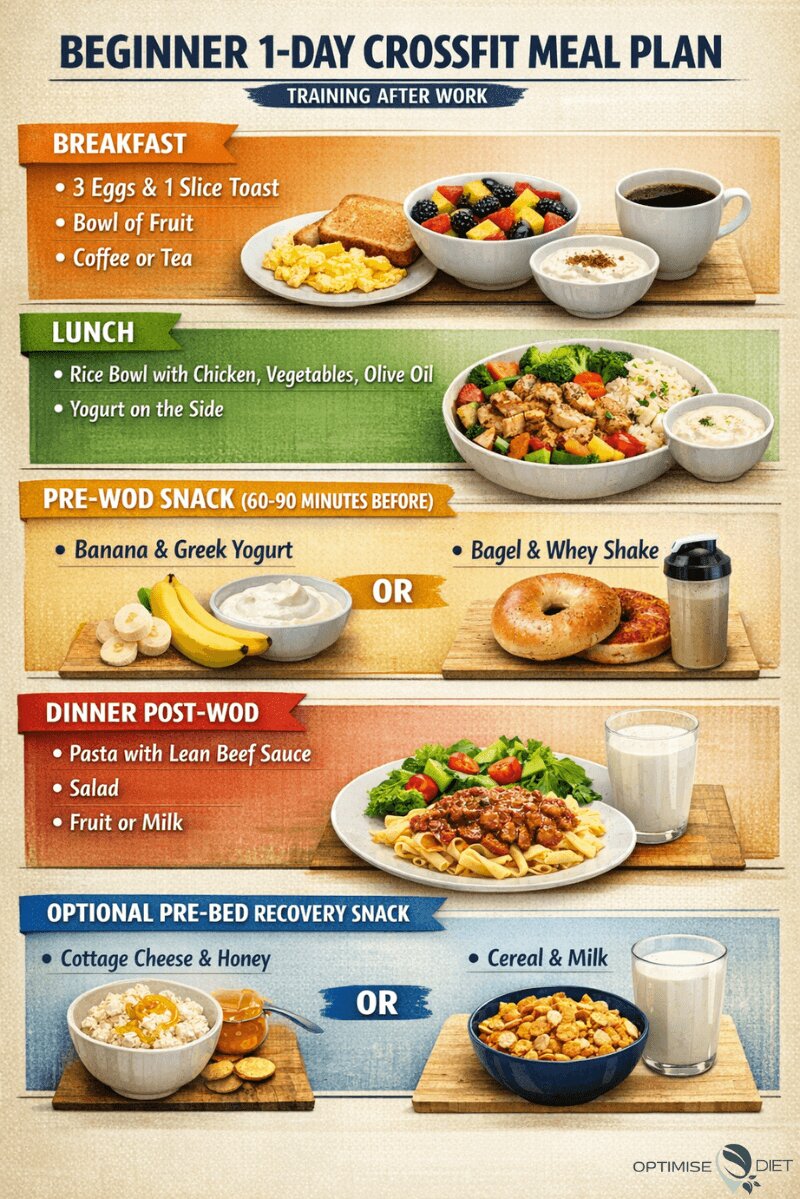
Assumes training after work.
Breakfast
- 3 eggs and 1 slice toast
- Bowl of fruit
- Coffee or tea
Lunch
- Rice bowl with chicken, vegetables, olive oil
- Yogurt on the side
Pre-WOD Snack (60 to 90 minutes before)
- Banana and Greek yogurt
or - Bagel and whey shake
Dinner Post-WOD
- Pasta with lean beef sauce
- Salad
- Fruit or milk
Optional Pre-Bed Recovery Snack
- Cottage cheese with honey
or - Cereal with milk
Fat Loss Without Killing Performance
Fat loss pairs best with CrossFit when the deficit stays mild.
Beginner Fat-Loss Framework
- Protein stays high at 1.6 to 2.2 g/kg/day
- Carbs remain sufficient to support training
- Fats stay moderate
- Calorie deficit stays small
Deficit Tactics That Protect Training Quality
- Remove liquid calories you do not value
- Tighten snack portions
- Plan treat meals intentionally
- Increase daily steps on non-training days
- Keep carbs around workouts
Recovery Nutrition That Actually Improves CrossFit
Recovery nutrition is where consistent progress gets protected, because food choices after training influence soreness, sleep quality, and how ready your body feels for the next WOD.
Sleep-Supported Eating

Hard training plus low calories plus poor sleep forms a fast burnout recipe. Eating a full post-training dinner with carbohydrates often improves sleep quality for many athletes.
Micronutrient Coverage
Some CrossFit dietary research highlights potential shortfalls in minerals like iron and calcium.
Basic coverage usually solves it:
- Dairy or fortified alternatives
- Red meat or iron-rich plant foods
- Leafy greens
- Daily fruit
Fiber Timing
Fiber supports digestion and health. Very high fiber right before training can cause discomfort during WODs. Save heavier vegetable portions for meals away from training.
Supplements – Worth Considering Or Skipping
Most beginners do not need supplements. Diet forms the foundation.
The International Olympic Committee emphasizes supplement use only when evidence supports safety, legality, and effectiveness. The Australian Institute of Sport echoes similar guidance.
Reasonable Beginner Options
- Creatine monohydrate for strength and power support
- Whey protein for convenience
- Caffeine with caution
Caffeine research in CrossFit remains mixed. A 2025 study found that a high dose did not improve overall CrossFit workout performance. Moderate use and personal tolerance matter more than dosage hype.
Supplements to Approach Carefully
- Fat burners
- High-stimulant pre-workouts
- Products with unclear labeling
Common Beginner Mistakes And Practical Fixes
- Eating clean, but not enough
Fix: Add one or two carbohydrate servings daily for a week.
- Protein intake is too low
Fix: Prioritize protein at breakfast and lunch.
- Low-carb eating with poor WOD performance
Fix: Place carbs before and after training.
- Under-hydrating and under-salting
Fix: Hydrate earlier in the day and salt food normally.
- Copying advanced athlete diets
Fix: Focus on recovery and consistency first.
A Weekly Beginner CrossFit Diet Checklist
- Protein around 1.6 g/kg/day
- Carbs 3 to 5 g/kg/day , adjusted by performance
- Fruits and vegetables 2 to 4 servings daily
- Hydration is planned rather than reactive
- Pre-workout carbs and protein
- Post-workout protein and carbs
- Repeat meals that work
What To Eat For Strength And Conditioning
A beginner CrossFit diet that works in real life stays simple:
- Eat enough to recover.
- Keep protein steady every day.
- Use carbohydrates to support training intensity.
- Hydrate like an athlete rather than a forgetful office worker.
- Repeat meals you can maintain.
Strength and conditioning grow faster when food supports the work rather than complicating it.