
Arnold Schwarzenegger has eaten for two very different jobs across his life. One job was winning bodybuilding titles, where food supported high training volume, high body weight, and the visual demands of the stage.
Another job is staying strong, mobile, and lean enough to train daily in his late 70s, while keeping heart health in check and managing old lifting injuries.
A single fixed diet plan never existed in his world. What exists is a set of patterns that shift with the goal, the era, and his priorities. His modern routine looks plant-forward and very repeatable, while older bodybuilding templates show a heavier, more protein-dense approach built around multiple meals and a post-workout shake.
Both lanes share a few core habits that show up again and again: daily protein matters, food quality matters, and the plan must stay simple enough to repeat for years.
Today, we prepared a breakdown of calories, macros, and daily meals, plus a clear way to translate the Arnold style into something usable for real people.
The Two Eras Of Arnold Schwarzenegger Diet

Arnold’s eating habits make sense when separated into two lanes.
Modern Arnold – Health, Mobility, And Consistency
In recent interviews and newsletter updates, Arnold has described a mostly plant-based routine. He has put that number around 70% plant-based in a 2025 interview and about 80% plant-based in earlier statements tied to improving cholesterol. His meals repeat a lot.
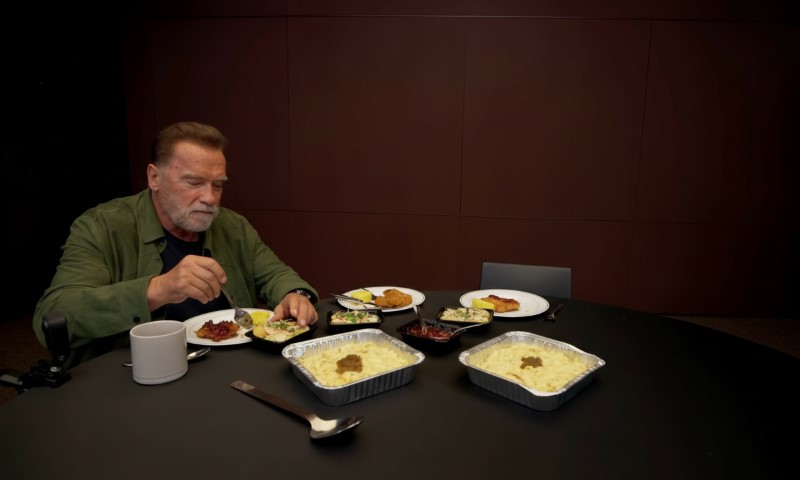
He often starts with oatmeal or yogurt. Lunch centers on a salad with a protein option. Dinner leans on vegetable soup and cucumber salad, finished with pumpkin seed oil. Travel days include heavier meals, then he returns to routine and adds more activity.
Bodybuilding Templates
A widely shared “Eat Like Arnold” day published by Muscle & Fitness lays out a classic bodybuilding day of eating. It uses multiple meals, whole foods, and a post-workout drink that combines milk protein and egg protein.
That template lists full macros and calories for the day. It represents the old-school structure that fueled heavy training and higher body weight.
Both lanes share a principle that shows up repeatedly in his modern content. Hit daily protein, keep food quality high, and keep the plan easy enough to repeat.
Calories – What Arnold’s Day Looks Like Now Versus Then
Exact daily calories change with body size, travel, training volume, and appetite. Arnold has also said he was never strict about diet and tends to compensate with extra exercise after higher-calorie travel days.
A Published Bodybuilding Day: 2,750 Calories
Muscle & Fitness published a full-day plan labeled “The ‘Arnold’ diet” with 2,750 calories and a very high protein total. It offers a clean anchor for people who want hard numbers.
Modern Arnold – Treat Calories As A Range
Recent reporting gives specific foods, not a calorie total. A day built around oatmeal or yogurt, a salad with a protein choice, and soup plus salad at dinner often lands in a moderate calorie range for many adults unless portions are large or snacks add up. The smarter move is to copy the structure, then adjust portions to match the goal.
A useful rule still applies. Calories drive weight change. Protein supports muscle. Carbs and fats fill the remaining energy needs.
Macros – What The Evidence Supports And What Arnold Recommends
Modern sports nutrition research gives more reliable macro targets than celebrity menus ever will. Arnold’s own newsletter guidance lines up with mainstream evidence.
Prioritize total daily protein, distribute protein across meals, and stop obsessing over meal frequency.
Protein
Evidence-based ranges for active people:
- 1.4 to 2.0 g/kg/day is sufficient for most exercising individuals
- Benefits from adding more protein tend to plateau around 1.6 g/kg/day in resistance training studies
- During a calorie deficit, higher protein intakes, roughly 2.3 to 3.1 g/kg/day, may help retain lean mass in trained people
Arnold’s own rule-of-thumb guidance is 0.7 to 1.0 gram of protein per pound of goal body weight, plus a per-meal guideline of roughly 20 to 40 grams depending on preference and schedule.
Practical Translation
- Goal weight 180 lb often lands around 125 to 180 g of protein per day
- Four protein hits across the day can target 30 to 45 g per meal or snack
Carbs And Fats
General macro distribution ranges for adults put:
- Carbs at 45% to 65% of calories
- Fat at 20% to 35% of calories
- Protein at 10% to 35% of calories
For lifters, macro planning often becomes:
- Protein fixed first
- Fat set to a livable moderate level
- Carbs used as the main lever for training fuel and calorie control
What Arnold Eats In A Typical Day Now
View this post on Instagram
Multiple interviews and his newsletter paint a consistent routine.
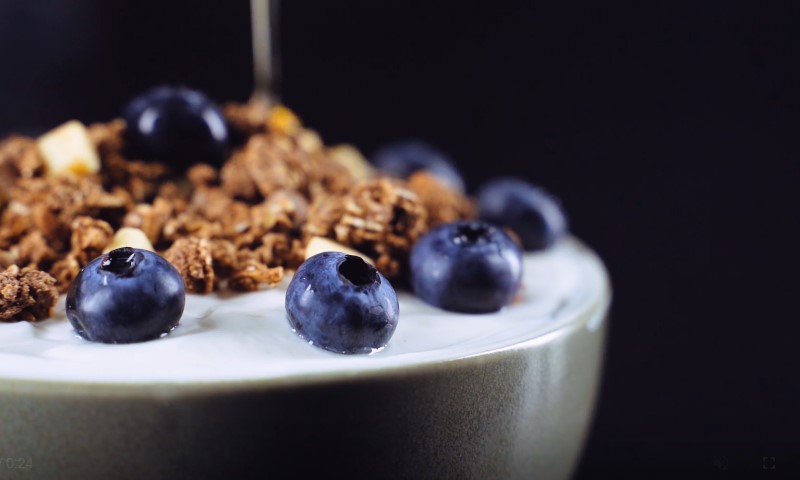
Breakfast Or First Meal: Oats Or Yogurt With Berries And Granola
Arnold has said he usually starts with oatmeal or yogurt, berries, and granola, just like Mike Mentzer and many others did.
Macro View
- Carbs and fiber from oats and berries
- Protein from yogurt
- Fat depending on granola portion
Lunch: Salad Plus A Flexible Protein
He has described lunch as always a salad, sometimes with a plant-based burger, salmon, chicken, or eggs in a scramble or omelette.
Why it works:
- Volume comes from vegetables
- Protein controls hunger and protects lean mass
- Fats stay adjustable via dressing and add-ons
Dinner: Vegetable Soup, Cucumber Salad, Pumpkin Seed Oil
He has described dinner as light, centered on vegetable soup and cucumber salad, often dressed with pumpkin seed oil tied to his Austrian roots.
Pumpkin seed oil has some early clinical evidence for cardiovascular markers in specific groups, though the food choice also makes sense as a flavorful unsaturated fat used in small amounts.
Treat Meals And Travel
Travel days include pasta, schnitzel, and other higher-calorie meals. After travel, he returns to routine and adds more activity.
A Modern Arnold Macro Template
No interview provides a full, weighed food breakdown, so the totals below are estimates meant for planning.
Template Goal
Strength, health, and leanness for an older lifter.
A reasonable planning target uses a minimum protein anchor of 83 g/day, with room to go higher if desired.
Estimated Daily Target Range
- Calories: 1,900 to 2,500
- Protein: 90 to 140 g
- Carbs: 180 to 280 g
- Fat: 55 to 85 g
Example Structure
- Meal 1: oatmeal or Greek yogurt, berries, granola
- Meal 2: salad plus salmon, chicken, eggs, or lentil or bean burger
- Meal 3: vegetable soup, cucumber salad, pumpkin seed oil
Add-ons that often show up across his wider routine include eggs, salmon, chicken, veggie burgers, and occasional protein powder use.
The Classic “Arnold” Bodybuilding Day
For readers who want hard numbers, the Muscle & Fitness day offers a clean reference.
Meals
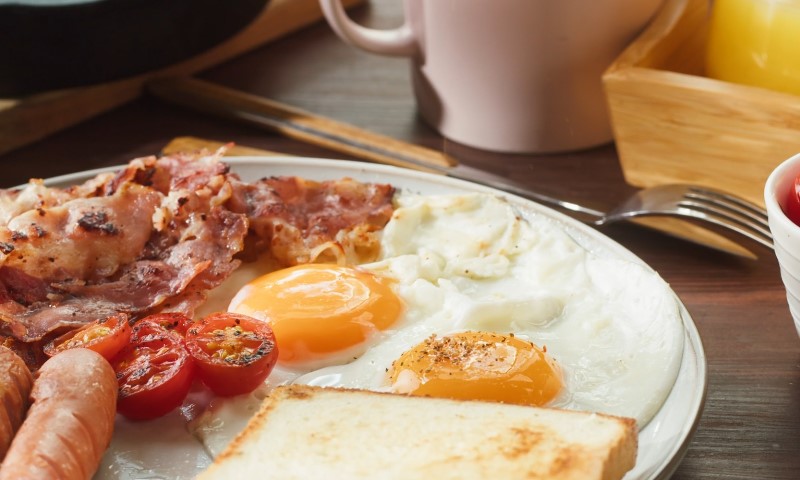
- Breakfast: 3 eggs, oatmeal, orange juice, low-fat milk
- Snack: mixed nuts, apple or banana
- Lunch: chicken breast sandwich on whole wheat, apple, low-fat milk
- Snack: cheese, banana
- Post-workout drink: milk protein plus egg protein blended with low-fat milk
- Dinner: lean beef, baked potato, salad, vegetables
- Snack: low-fat milk
Published Totals
- Calories: 2,750
- Protein: 256 g
- Carbs: 271 g
- Fat: 90 g
That protein level sits well above what research suggests is necessary for most lifters. High-protein diets can still work for appetite control and preference.
The smarter takeaway lives in the pattern. Protein appears at every meal, carbs cluster around training, vegetables appear daily, and the routine stays repeatable.
Calories And Macros By Goal
Instead of copying a celebrity menu, use a simple method.
Step 1: Pick A Calorie Lane
- Maintenance for stable body weight and stable performance
- Surplus for slow gain and better training output
- Deficit for fat loss and hunger management
Step 2: Set Protein
Two reliable options:
- Evidence-based: 1.4 to 2.0 g/kg/day
- Arnold’s shortcut: 0.7 to 1.0 g/lb of goal weight
Step 3: Distribute Protein
Protein spread across meals works well for most lifters. Per-meal targets commonly land in the 20 to 40 g range. Protein every 3 to 5 hours also fits many schedules.
Step 4: Fill Remaining Calories With Carbs And Fats
Use general macro ranges as guardrails, then adjust to training and preference.
Meal Timing And Frequency
Bodybuilding culture once pushed eating every 2 to 3 hours. More recent guidance shows:
- Three meals or six meals can both work when calories and macros match
- Meal frequency stays a preference choice
- Total intake and food quality matter more
For lifters, practical advice stays simple. Eat enough protein daily. Keep protein hits consistent across the day. Place a meal within a few hours of training if possible.
Supplements In Arnold’s World
Supplements play a supporting role in Arnold’s routine, used as simple tools to cover protein needs and recovery rather than as the foundation of his diet.
Protein Powder
Arnold has talked about protein powder for years, including a plant-based blend tied to Ladder. He has also said he drinks fewer protein shakes now. Protein powder works as a convenience tool, not a requirement.
Cherry Juice For Recovery
One reported post-workout shake includes cherry juice. Evidence suggests a small-to-moderate benefit for recovery outcomes, though study designs vary.
Raw Egg Note
Some reported shake recipes include a raw egg. Food safety guidance varies by region and egg handling. Similar protein benefits are easy to reach without raw egg.
Practical Arnold Meal Plans
Ready-to-use meal structures based on Arnold’s real routines make it easier to set calories, hit protein targets, and keep daily eating simple enough to repeat.
Plan A: Modern Arnold Structure
Use for health, leanness, and daily training.
Meals
- Oats or Greek yogurt, berries, granola
- Big salad plus protein such as salmon, chicken, eggs, or a plant-based burger
- Vegetable soup, cucumber salad, pumpkin seed oil
Macro focus
- Protein: 90 to 140 g/day
- Fiber: high
- Fats: mainly from oils, fish, nuts, and seeds
Plan B: Classic Bodybuilding Template
Use for old-school structure and higher protein.
Follow the Muscle & Fitness day and scale portions based on body size and goal. Published total sits at 2,750 calories with 256 g protein.
Quick Reference Table
| Diet Lane | Calories | Protein | Carbs | Fat | Meal Pattern |
| Published bodybuilding day | 2,750 | 256 g | 271 g | 90 g | Multiple meals plus post-workout drink |
| Modern Arnold estimate | 1,900 to 2,500 | 90 to 140 g | 180 to 280 g | 55 to 85 g | Oats or yogurt, salad plus protein, soup plus cucumber salad |
| Cutting phase template | Goal-dependent deficit | Higher end of protein range | Moderate | Moderate | Protein prioritized to retain lean mass |
Key Takeaways Worth Copying
- Protein target first. Daily total matters more than perfect timing.
- Meal frequency stays a preference choice. Three meals or six meals can both work when calories and macros match.
- Modern Arnold repeats simple meals. Oats or yogurt, salad with a protein option, soup and cucumber salad, plus pumpkin seed oil.
- The published bodybuilding day offers a clear high-protein template with hard numbers, useful as a starting point for people who want structure.
Arnold’s diet story never sat inside a single fixed menu. His success came from patterns that stayed repeatable, protein targets that stayed consistent, and meals that matched the job at hand. Copy the structure, adjust portions to your goal, and keep the routine simple enough to repeat.